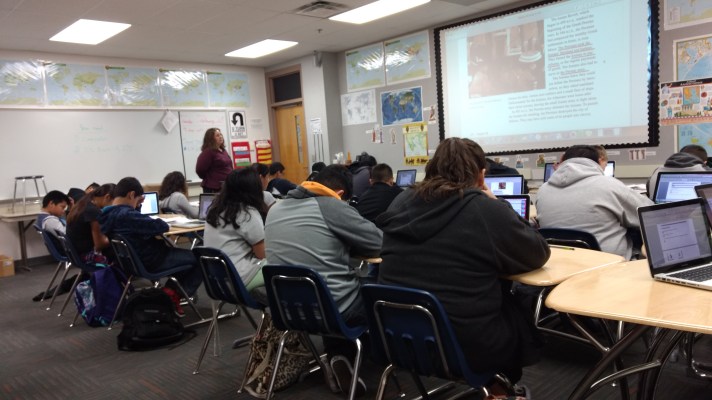
Differentiated Instruction (DI) is concerned with individual students. DI also stresses that no two students are alike. Unique pathways within DI are created for each individual student’s learning by educators who are working with said student(s). This is done, so that, children can develop multiple ways of absorbing information and forming an understanding of the content delivered.
One component of DI that I found encouraging is that DI invites students to take part in the responsibility for their learning.
Here are 20 Ways to Differentiate
I) Have the Tools You Need to Regroup or De-Escalate Students
Have tool kit ready to de-escalate students who are overwhelmed or near a stage of melt down. A Safe, quiet calm space works if you do not have access to items like this from Fun & Function
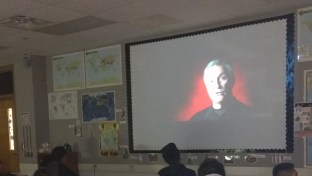
II) Use Ted Talks
Follow this link to find more information on using TED TALKS

III) Use Audio Clips to Reinforce Lesson Objectives
This is an excellent cost effective way to introduce learners to experts. Audio clips work well as a substitute for field trips if students are limited in mobility.
IV) Offer Earphones for Noise Reduction or Noise Cancellation
Wearing headphones can offer a grounding solution to students who are easily overstimulated. Additionally they can be used in classrooms or libraries to help students focus.

V) Use Music
This may help with volume control as well as the tone of a room. Music also can mask many subtle noises that are distracting.

VI) Use Lightening
Maybe you want wake the students up? Try bright colorful lights or natural light . If a calm atmosphere is desired try dimming the lights. Another use of lights is to correspond them with seasons or holidays, this is a favorite of mine. 
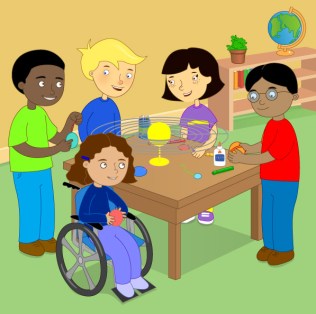
VII) Pair Students According to Strengths Weaknesses
Pair children who have a disability with students who do not have the same challenges. Or pair a strong reader with a strong mathematics student.
VIII) Use an E-text Book
Project an e-book while students are reading a paper text book simultaneously. Students who need added support will benefit. Those who have learning disabilities, or who are English Language Learners (ELL), may prosper from this technique.

IX) Develop a Pre-Assessment to Gage Each Student’s Readiness to Learn
Building awareness of all students current understanding is an important practice in DI. Effective teachers give their students back ground information needed prior to the start of a lesson. This is done by using a pre-assessment that is focused on specific “Big Ideas” and have questions worded in kid language.
XI) Use a variety of Ways for Students to Express Evidence of Mastery
Acceptable proof of student mastery can be delivered by using art, music, dance, essay or a multiple choice test. As long as the appropriate evidence for mastery is feasible and efficient it can be used to demonstrate mastery of Common Core Standards. Remember the collection is intentionally designed to meet individual student(s) educational needs so communication is vital.
XII) Use Dual Language Books
Dual Language books are a bridge for learners who are learning a new language. The books are available for all reading levels and generas. They can be used for Self Selected Reading or Read Alouds in ELL classrooms. Typically they are available in the libraries of Public Schools.

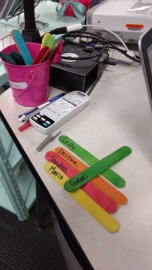
XIV) Use Sticks with Student’s Names
The sticks become is a visual aid to students that the teacher is intentionally calling on each student randomly. Pulling sticks also protects the educator from gender bias.
XV) Allow Students to Work Independently or in Collaboration When Possible
Students who are given freedom to take some responsibility in their learning will likely be high performers. Giving students the choice to partner work or work solo will improve learning according to Learning Accelerator.
XVI) Be Responsive to Visually or Hearing Impaired Students
Modifying seating and furniture placement to accommodate learning needs of all students is an attribute of creating an Integrated DI classroom. All this according to the book Integrating Differentiated Instruction & Understanding by Design: Connecting Content and Kids 1st Edition by

XVII) Use On-line Communication Platforms
Edmodo is made available to many teachers and students by the school districts they are a part of. It is an easily accessible communications vehicle to serve parents, students and teachers.
XVIII) Use a Microphone in Class
A microphone serves a few purposes. They are a option for integrating ELL students as the microphone helps children to hear spoken English in class. They serve hearing impaired students and help build confidence for upcoming public speaking.
XIV) Project Note Taking
If students must complete notes in class, have the teacher’s note taking projected to aid in spelling, reading and comprehension.

XX) Provide Timely Feedback
Feed back is crucial when related to students success. There are five important components to delivering feedback, 1. It needs to be given as soon as possible. 2. The receiver must be able to understand the feedback with out confusion. 3. Delivery must be focused. 4. Feedback needs to make allowances for adjustments. 5. Students need to have access to their progress according to Edutopia
.

 Raising Awareness about Human Trafficking
Wow! What a great post! Things that I already planned on using was music and possibly, as long as I can get some sort of a deal for them having headphones to offer them because I’ve observed this in classrooms and it helps. Some students just need to be in their own world in order to study information efficiently, and some students need pure quietness in order to study, which rarely happens in a classroom. I love this list thank you for sharing.
LikeLiked by 1 person
Sure, I am taking a SPED class also and this post was part of an assignment.
LikeLiked by 1 person
How cool.
LikeLike